The Mismatch of Speeds: A Morning Meditation.
Joseph V Mykulangara 24-December-2025
The morning opened in its usual quiet way, pale light spilling over the rooftops, the scent of damp leaves rising from last night’s rain. I stepped out, expecting nothing more than the rhythm of my usual walk, but something in the air made the world feel slower, softer.
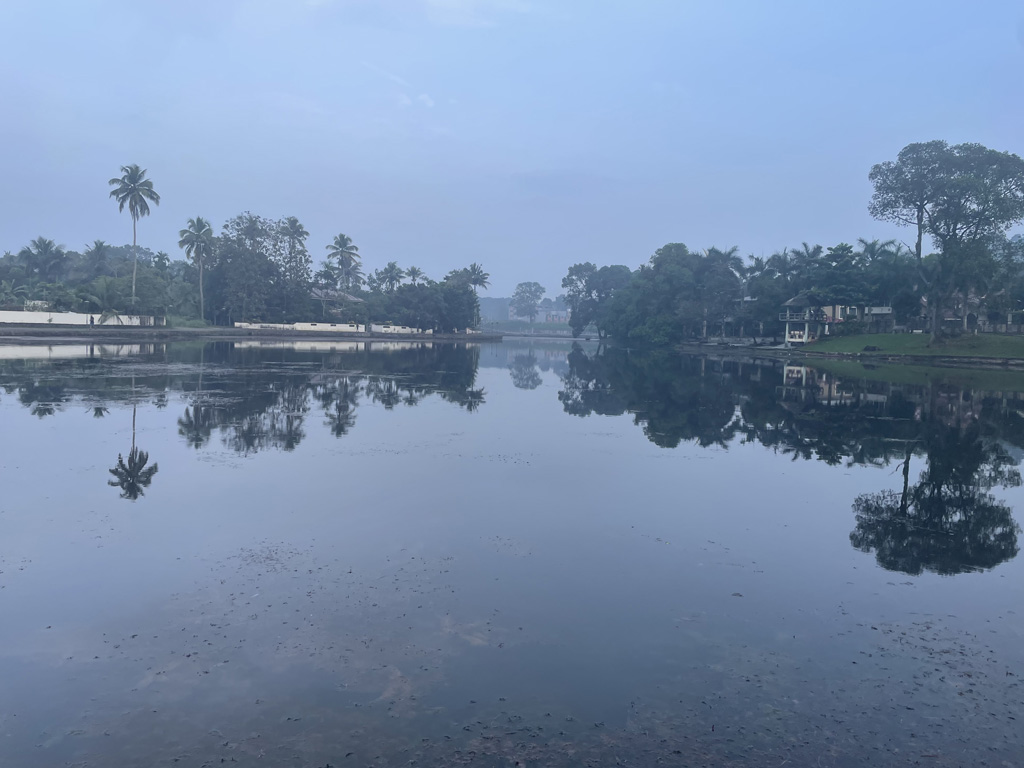
Ravi was already waiting at the junction near the chira, the small water body where we always turned for our morning walk, stretching with his usual energy. Samkutty soon joined, adjusting his glasses as if the morning itself needed literary framing. Anil arrived last, jogging in with his breath catching on the light mist.
“Good morning!” Ravi called, waving. “Morning,” I replied.
We fell into our familiar rhythm — our shadows moving across the quiet road, our steps echoing gently against the waking village.
It was Anil who first noticed the elderly couple slowly making their way along the edge of the road.
“They walk so carefully,” he said.
A young man slowed briefly as he passed them, glanced at his phone — perhaps a message about the day’s work schedule — then quickened his pace again.
Nothing was wrong in either movement. One carried time in the body; the other carried it in his pocket.
Almost instinctively, I slipped my own hand into my pocket, then paused. There was no phone there. In that small moment, I realised I had stepped out of that rhythm — retired from the urgencies of professional life.
“Yes,” I said. “I’ve been thinking about that. Elders continue their morning routines as they always have, while the world around them has learned to move faster.”
Samkutty fell silent for a moment, then murmured, “It’s not just the roads. Think about our cultural gatherings — literary meetings. Elders remain steady there. The young are present too, but in fewer numbers, and differently.”
Ravi nodded thoughtfully. “It isn’t disrespect. It’s just… speed. Life moves faster than traditions can keep up.”
Watching them, I couldn’t help but think of Ivan Turgenev’s Fathers and Sons. In the novel, the tragedy isn’t that the young attack the old; they quietly stop inhabiting the world that once felt inevitable. The old remain — holding memory, experience, and continuity — adjusting to a future that has already begun without them.
Samkutty tilted his head. “Memory… continuity… That’s what’s being lost quietly, isn’t it? Not the elders themselves, but their central place in our lives. Their knowledge, their rhythm.”
“Yes,” I said. “Sometimes, what’s missing is not interest, but alignment with a pace that has changed. I saw it the other day at a local literary programme. Almost everyone in the room was older. One man folded his programme carefully at the end, even though no one remained to discuss it. It felt less like the end of an event, more like a page closing in silence.”
Ravi shook his head slowly. “It must hurt… to keep showing up and not be needed the same way.”
“It does,” I agreed. “But evolution is like this. Not only biological — cultural and psychological too. Each generation adapts to survive. The young move toward speed, flexibility, innovation. The elders carry memory, stability, caution. Both strategies are valid. The tension appears when the pace changes faster than humans can keep up.”
Anil laughed softly. “So we’re not bad or lazy. Just… mismatched speeds?”
“Exactly,” I said. “The generation gap today isn’t a clash of ideas. It’s a difference in pace — shaped by education, technology, and the speed at which life now unfolds.”
We walked in silence for a while. The chira glimmered in the morning light. And yet, even in the quiet, the image of the elderly walkers and the sparsely attended gatherings lingered.
“This reminds me,” I said, “of something I keep thinking about for my book. Observations like these — on walks, in half-empty halls — are what led me toward a longer work, returning again and again to the same question: not whether change is necessary, but how we remain human while carrying it forward.”
Samkutty nodded slowly, thoughtful. “And you’re carrying it forward, aren’t you? By noticing, by writing it down.”
“Yes,” I said. “I’ve been thinking about that. We can’t slow the world. But we can observe, honour, and continue — even if silently.”
Ravi finally spoke, with a small grin. “So the walk isn’t just exercise anymore. It’s… philosophy.”
I laughed. “Perhaps. Or maybe it’s just paying attention. Watching who still walks, who still shows up, and what they carry along the way.”
We ended our walk at the tea shop near the corner. As Ravi sipped his filter coffee and Anil stretched back, I felt the same quiet warmth I often do after mornings like this. Not every lesson comes with applause. Sometimes, it comes from simply noticing — and sharing it with companions who walk beside you.
Evolution does not fail when things change. It fails only when we forget what once made survival worth carrying.