Why I Wrote This Book: The Quiet Restlessness That Follows Us
Joseph V Mykulangara 20-December-2025
Writing between Texas and Kerala.
This reflection explores the process of writing a book shaped by journeys in Texas, childhood memories from Kerala, and the act of writing itself. It looks at why neither a simple travelogue nor a conventional memoir could carry the weight of memory, personal stories, and the quiet restlessness that travels with us across time and place.
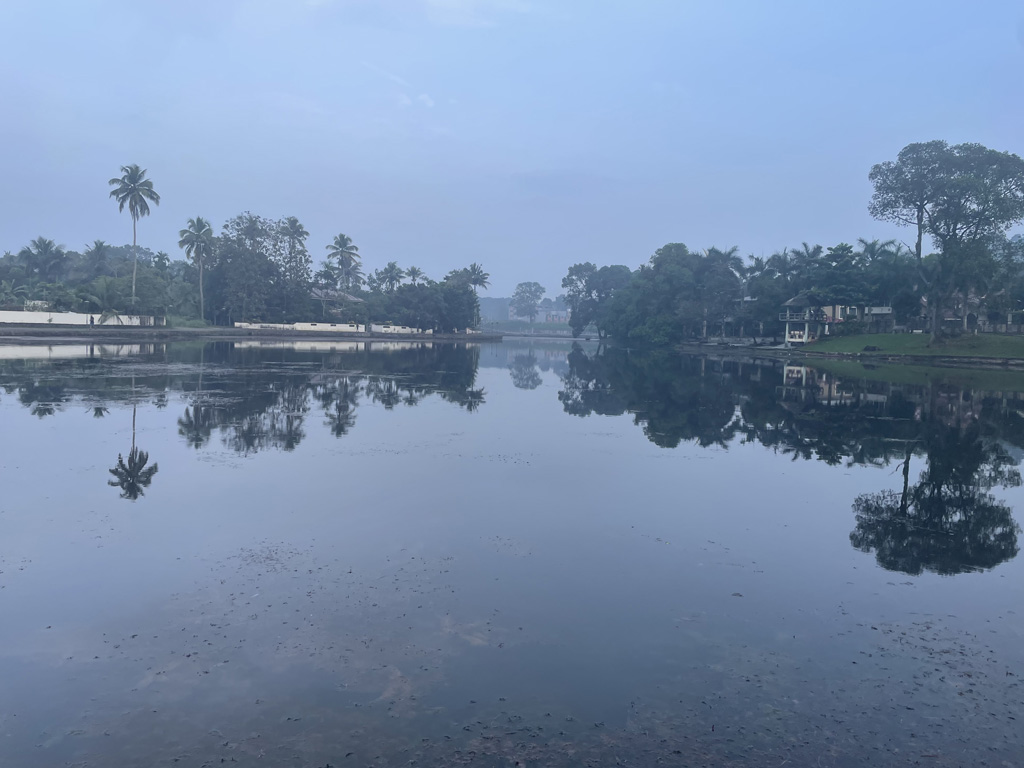
The sky was still half-asleep when I arrived at the chira. A delicate mist hovered over the water, and the lilies seemed to wait, patient and still, for the sun to lift them into the day. On mornings like this, I often remember what Turgenev wrote — that nature speaks first, and we understand ourselves only after listening.
Ravi, in his fifties but still a force of energy, was already there. Hands on hips, chest rising and falling with deep, deliberate breaths — the warm-up of a man preparing for next week’s mini-marathon. Even in the morning hush, he couldn’t resist mentioning it.
From behind a mango tree, Samkutty appeared, adjusting his glasses. His eyes, sharp as ever, fixed on me.
“Now tell us the real thing,” he said. “Why did you start writing this book?”
We began walking. A fish surfaced nearby, breaking the water with a gentle splash. Ravi paused, studying the ripples with the seriousness of a scientist, imagining its weight.
I inhaled the morning air, letting it settle before speaking. “This book didn’t begin with a plan,” I said slowly. “It began with a feeling — a quiet restlessness that follows you, unseen.”
“Restlessness?” Ravi asked, eyebrows raised, slipping in a predictable joke.
“Not that kind,” I said, smiling.
“It’s the softer kind — the one that moves with you even when life outside looks still. The kind that travels from Mumbai to Texas, from childhood memories to the weight of adult responsibility.”
Samkutty nodded, pushing his glasses up. “As Fathers and Sons reminds us,” he said softly, “everyone carries unspoken memories. And when we notice them, we understand life a little better.”
Halfway around the chira, Anil joined us, slightly breathless, steel bottle in hand.
“So what made you write this book?” he asked, his voice unusually gentle.
We paused beneath the wild jackfruit tree, its leaves scattering shadows like fragments of memory. “Because our ordinary stories are vanishing,” I said. “We move, chase, migrate… and somewhere along the way, the roots that once held us begin to loosen.”
Silence followed — not heavy, but thoughtful.
“When I visited my daughter in Texas,” I continued, “I realised I was carrying more than luggage. I was carrying unspoken stories — the pond where dragonflies skimmed the water, the old verandah where shadows played in the evening light, voices of people who shaped me, and some who left too soon. Everywhere I went, I found reflections of the human story — echoes that refused to fade.”
Ravi whispered, “Hmm… true.” Even my children, without meaning to, had encouraged me from afar, nudging me gently toward these pages.
“So I began to write,” I said.
“Not to impress anyone. Not to call myself an ‘author.’ But to understand my own journey — what Turgenev called the gentle work of remembering.”
“Like a diary?” Anil asked.
“Not exactly. More like… listening to myself for the first time. Giving form to the invisible threads that connect past and present, time and memory, home and away.”
We reached the tea shop. The familiar aroma of fresh filter coffee welcomed us. Steaming cups arrived within moments. Anil, always the taste-expert, took a small sip and brightened instantly.
“Ah… this has a perfect decation,” he said, enjoying the word.
I laughed. “Yes… he adds a little sugar to the coffee powder while filtering. That’s what gives it this gentle, caramel sweetness.”
Anil nodded, happily savouring the small, deliberate touch — a simple joy at the end of our morning ritual.
Ravi clapped me on the shoulder, grinning. “Then write it. Write these mornings, these memories, these walks. People will read. People will feel.”
And for the first time, I believed him. People will feel — the gentle ripples of mornings like this, lingering long after the sun rises.
Why a Travelogue or Memoir Wasn’t Enough.
Writing this book required more than recounting places or events. It became a way to capture the invisible threads of memory, connection, and movement — the subtle echoes that link Texas, Kerala, and the inner landscape of personal experience.
Why I Wrote This Book
In the end, the reason was simple. Writing became my way of holding on to what life keeps trying to blur.
• To remember.
• To understand.
• To honour the small truths that travel with us — quietly, persistently, shaping who we become.
For more reflections on memory, place, and the stories that travel with us, explore other posts.